Top 10 Ranked Golf Gadgets: Fall of 2026
Updated September 2026
Golf tech is full of $300+ purchases you'll second-guess on the first tee. We dug through manufacturer specs, buying guides from golf publications, and thousands of golfer reviews to rank the gadgets actually worth your money — and to tell you plainly which ones aren't for you.
Quick picks
Bushnell Tour V6 Shift
Exact flag yardages with slope, from the most trusted name in rangefinders.
Typically around $400
Check priceGarmin Approach S70
Course GPS on your wrist plus a full smartwatch for every other day of the week.
Typically around $650–$700
Check priceRapsodo MLM2PRO
Tour-level ball and club data at the range or at home, under $1,000.
Typically around $700
Check priceCompare all 10
| Rank | Product | Best for | Typical price |
|---|---|---|---|
| #1 | Bushnell Tour V6 Shift | Exact flag yardages | Around $400 |
| #2 | Garmin Approach S70 | GPS watch + smartwatch | Around $650–$700 |
| #3 | Rapsodo MLM2PRO | Serious practice data | Around $700 |
| #4 | Arccos Smart Sensors | Automatic shot tracking | Around $200–$250 |
| #5 | HackMotion Wrist Sensor | Fixing an inconsistent clubface | Around $345 |
| #6 | Orange Whip Trainer | Tempo and warm-ups | Around $120 |
| #7 | Perfect Practice Putting Mat | Home putting practice | Around $160–$180 |
| #8 | Bushnell Wingman 2 | Music + casual GPS | Around $150–$170 |
| #9 | Phigolf 2 Simulator | Indoor golf fun on a budget | Around $280–$330 |
| #10 | Motocaddy M7 GPS | Remote electric walking caddy | Around $2,099 |
Bushnell Tour V6 Shift Laser Rangefinder
Typically around $400 (frequently on sale under $350)
The single most-bought piece of golf tech — Bushnell is the #1 laser rangefinder in professional golf, and the V6 Shift is its current flagship.
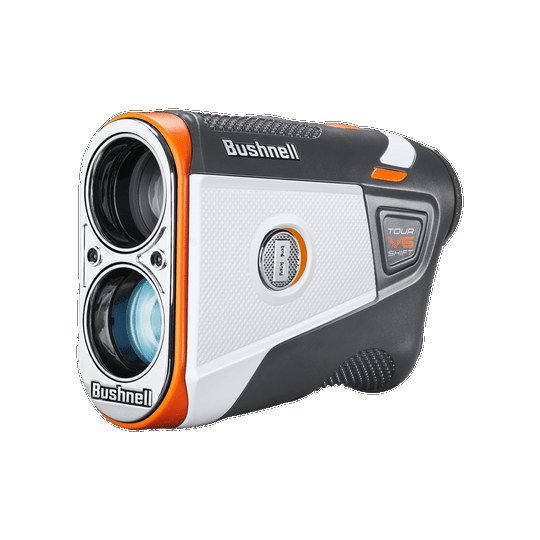
Best for: Any golfer who wants exact flag yardages. The slope version suits casual and competitive-amateur play, and the Slope-Switch makes it tournament-legal with one toggle.
- 5–1,300 yard range, accurate to within 1 yard
- 6x magnification with PinSeeker and Visual JOLT lock-on confirmation
- Slope-Switch: slope-adjusted distances on or off
- BITE magnetic cart mount; IPX6 weather-resistant; CR2 battery
Pros
- Exceptional accuracy and consistency — the most accurate Tour-series laser Bushnell has released
- Magnetic BITE mount is a genuine convenience win on cart rounds
- Visual JOLT gives clear, unmistakable pin-lock confirmation
Cons
- Premium price — solid budget lasers run $200–$250
- LCD display rather than the brighter red/black OLED of the Pro X3
Garmin Approach S70 Golf GPS Watch
Typically around $650–$700 (47mm / 42mm)
The premium GPS watch category leader — and it doubles as a daily smartwatch, which widens its buyer pool well beyond golf.
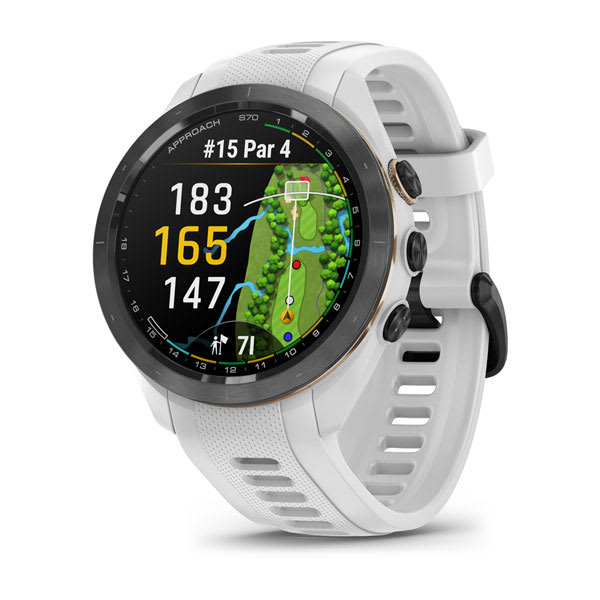
Best for: The golfer who wants GPS on the wrist plus a full-featured smartwatch for everyday wear.
- 1.4" AMOLED touchscreen (47mm) / 1.2" (42mm); 43,000+ preloaded course maps
- Virtual Caddie club recommendations; enhanced PlaysLike distances (slope, wind, temperature)
- Green contour data (requires Garmin Golf app membership)
- 20 hrs GPS / 16 days smartwatch battery (47mm); 5 ATM water rating; Garmin Pay
Pros
- Best-in-class display brightness and course maps
- Virtual Caddie genuinely learns your shot dispersion
- Deep health and fitness tracking for the price
Cons
- Steep price — roughly 2x the Garmin Approach S12 (typically around $200)
- Green contour data requires a paid Garmin Golf membership
- Some golfers find the 47mm case bulky on the wrist
Rapsodo MLM2PRO Portable Launch Monitor
Typically around $700 (hardware; Premium subscription extra)
The most data-dense portable launch monitor under $1,000 — the radar plus dual-camera combo is unique at this price.
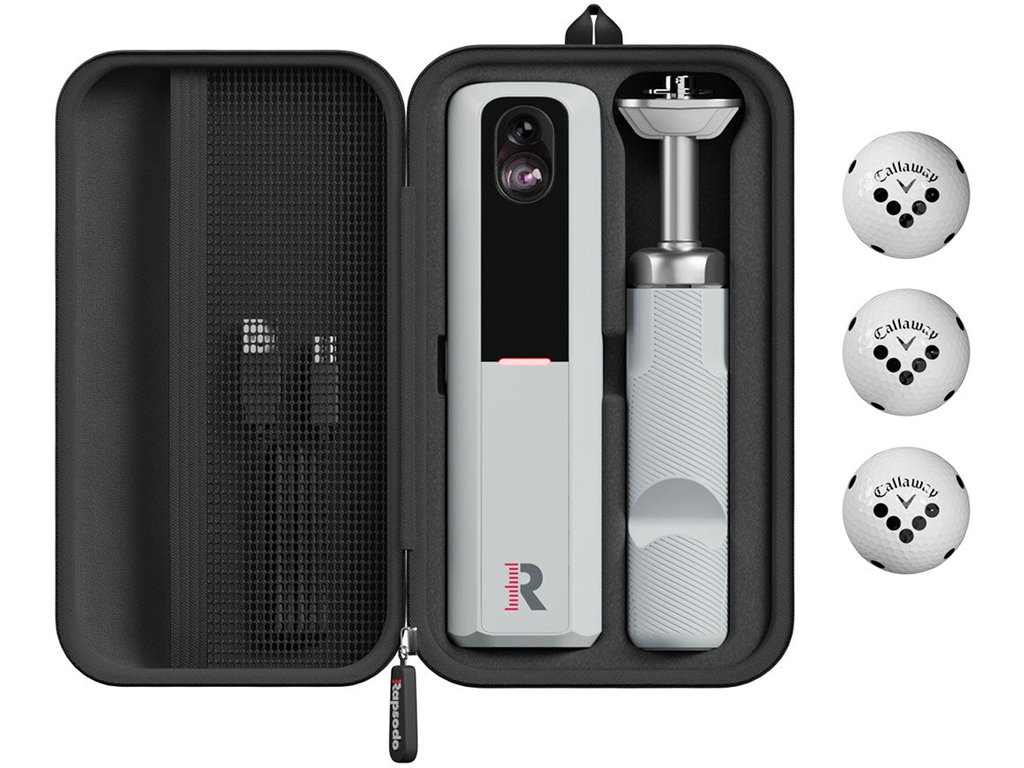
Best for: Serious practice golfers who want tour-level ball and club data at home or on the range.
- Doppler radar + dual high-speed cameras; 15 data metrics, 8 directly measured (incl. club path, angle of attack)
- Measured spin rate and axis (requires RPT-marked balls)
- 240 FPS Impact Vision swing camera; 30,000+ simulated courses
- Works indoors and outdoors; iOS/Android app
Pros
- Directly measured spin and club data no other portable unit offers at this price
- Built-in swing video is genuinely useful for self-coaching
- Strong reviewer consensus that it beats the Garmin R10 on data depth
Cons
- Subscription paywall: Premium (typically ~$199/year) is required for spin data, simulation, and E6/GSPro — a lapsed subscription quietly disconnects those too
- ~4-hour battery is short vs. the Garmin R10's ~10 hours
- Not water-resistant; putting isn't tracked
Arccos Caddie Smart Sensors (14-Pack)
Typically around $200–$250 (hardware; subscription after year one)
The mainstream shot-tracking system — four straight Golf Digest Editor's Choice awards and a huge installed base.
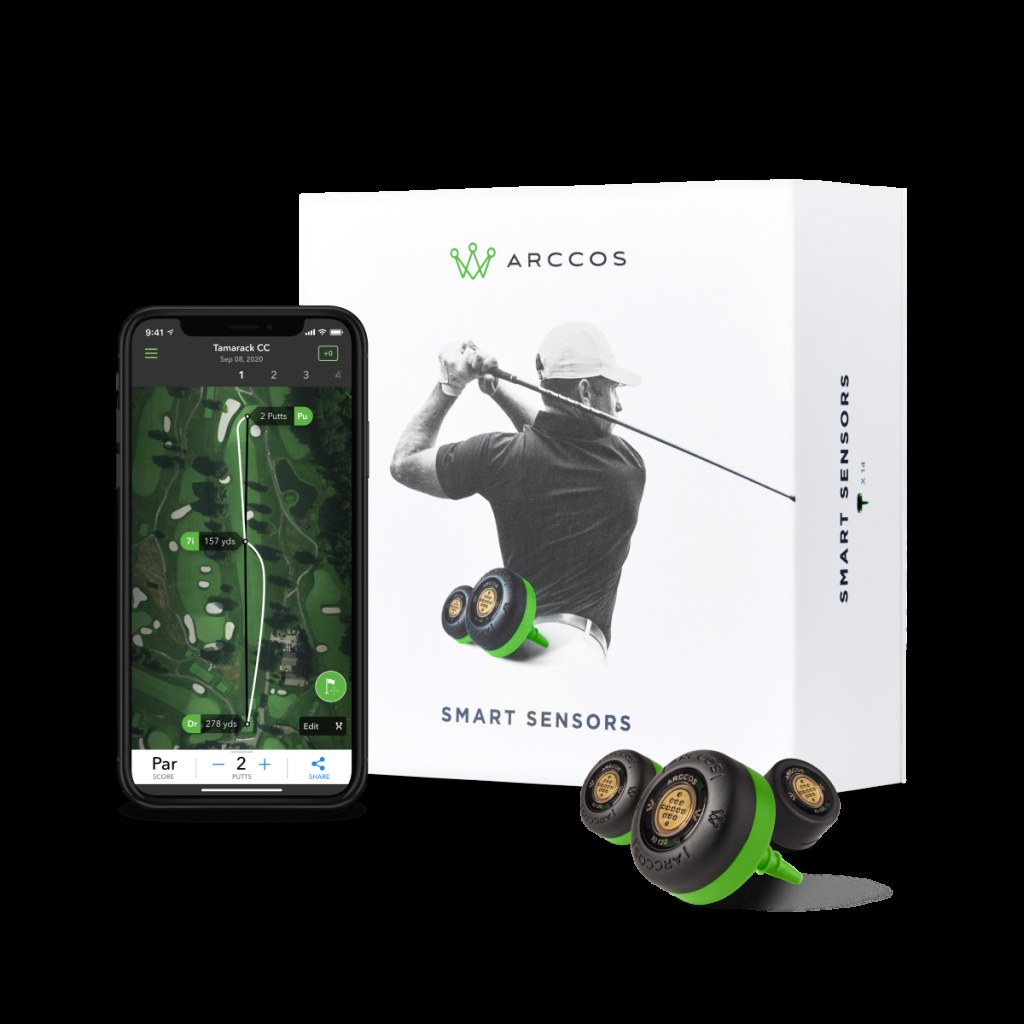
Best for: Data-curious golfers who want automatic, hands-free stat tracking and smarter club selection.
- 14 lightweight sensors — one per club, including putter
- Fully automatic shot tracking; AI-powered GPS rangefinder adjusting for wind, elevation, temperature, humidity
- 40,000+ mapped courses; strokes-gained analytics; caddie club recommendations
- Sensor batteries last ~2–5 years (non-replaceable); permitted under the Rules of Golf
Pros
- Truly automatic — no tagging or phone-tapping per shot
- The AI caddie number is widely praised for accuracy
- Arccos reports users drop ~4 strokes off their handicap in year one (their claim, widely cited)
Cons
- The subscription is the #1 complaint — the annual fee after year one is widely called overpriced on r/golf (verify the current price at arccos.com before buying; sources conflict)
- Can miss short chips and putts
- Your phone must stay in your front pocket (the Link Pro wearable is an extra purchase)
HackMotion Wrist Sensor (Sensor 4)
Typically around $345 (Core; Plus ~$495, Pro ~$995)
The only wrist-angle trainer with real-time biofeedback — beloved by coaches and data-driven improvers.
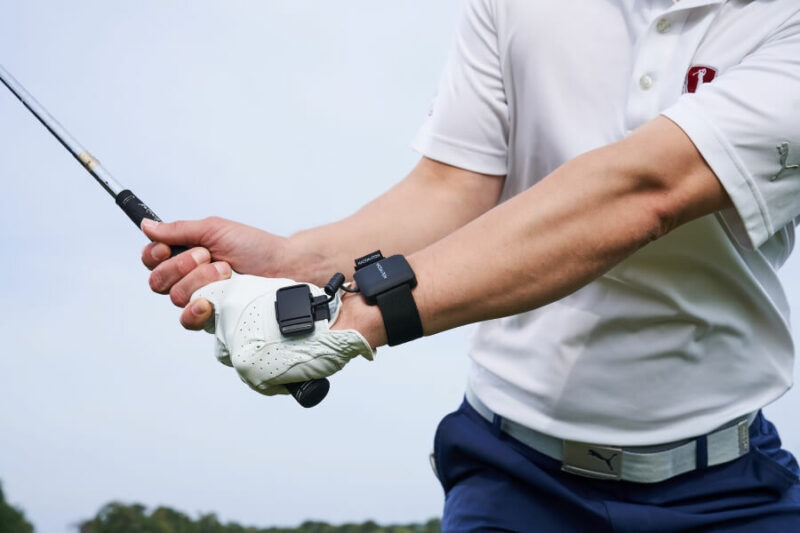
Best for: Golfers fighting an inconsistent clubface — slicers, flippers, "casters" — who practice deliberately.
- Dual 6-axis motion sensors sampling wrist motion at 800 FPS
- Real-time audio/haptic feedback on wrist angles; swing-fault diagnosis with guided drills
- Tour-player data benchmarks; no subscription — one-time purchase with lifetime app license
- iOS/Android; 2-year warranty; 30-day returns
Pros
- Instant, objective feedback no video can match
- Reviewers consistently say it shrinks shot dispersion
- No recurring fee — a real differentiator vs. Arccos and Rapsodo
Cons
- Demands real practice time — it's a tool, not a shortcut, so casual buyers may shelve it
- Mid-$300s entry price feels steep for a training aid
Get the next rankings first
One short email when we publish a new golf ranking or a major price drop on this list. No spam, unsubscribe anytime.
Orange Whip Swing Trainer (Standard)
Typically around $120
The evergreen, tour-validated swing trainer — a perennial best-seller with a 4.7/5 rating across 200+ Dick's reviews.
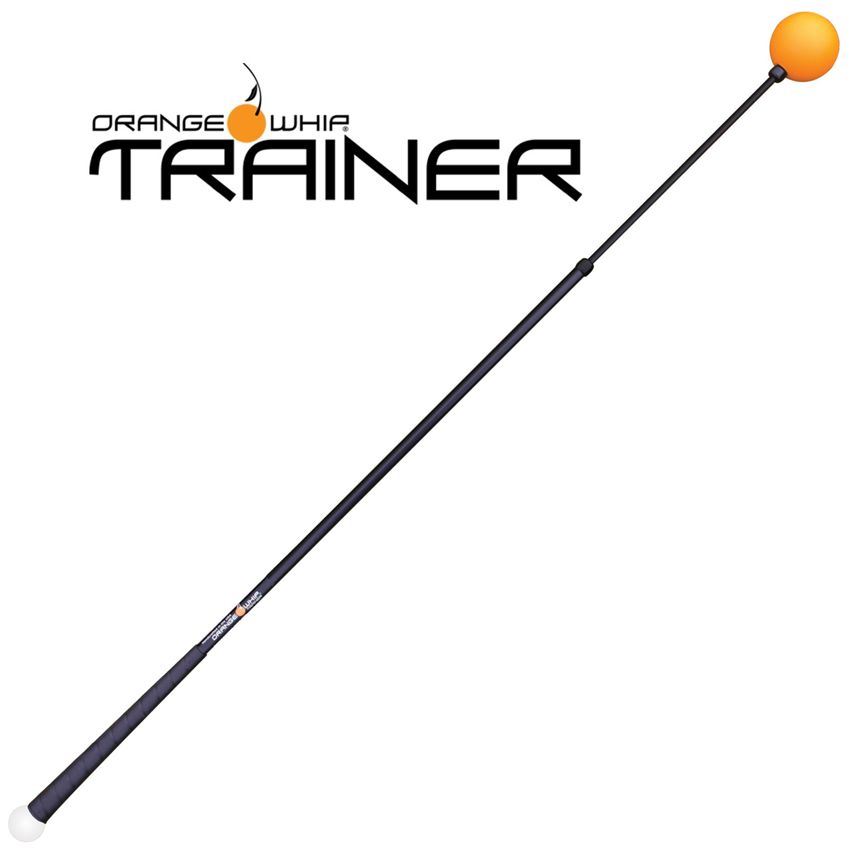
Best for: Golfers wanting a better warm-up and smoother tempo — a great pre-round loosener and off-season flexibility tool.
- Patented counterbalanced weighting system; flexible shaft syncs arms and body
- 47" / 1.75 lbs (Standard, simulates driver); also 43" Mid-size and 35.5" Compact
- Improves rhythm, tempo, balance, flexibility; made in USA; 2-year warranty
Pros
- Instant tactile feedback — any wobble in the shaft exposes tempo and balance flaws
- Trusted by tour pros and coaches; durable, simple, no batteries or apps
Cons
- $120 is steep vs. generic knockoffs at $30–$40
- Some reviewers say the stock grip feels cheap for the price
- It trains tempo, not mechanics — it won't fix a slice by itself
Perfect Practice Putting Mat (Standard Edition)
Typically around $160–$180
The best-selling premium putting mat, co-developed with Dustin Johnson — the automatic ball return makes practice genuinely addictive.
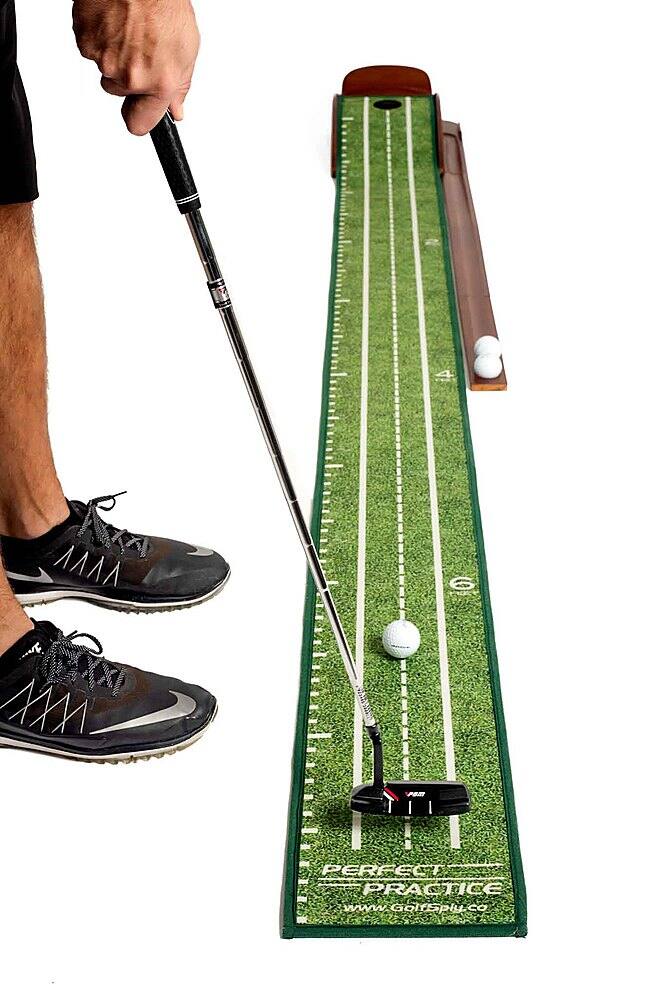
Best for: Any golfer who three-putts too often and wants tour-speed practice at home or the office.
- 9.5 ft mat with 8 ft of putting surface; crystal velvet TrueRoll surface, stimp-rated 10–14 (tour-green speed)
- Two hole sizes (regulation + reduced) for precision training
- Alignment track lines and distance markings; magnetic roll-back automatic ball return
- Lay-flat rubber base (budget 8-ft Rollback version typically around $80)
Pros
- Realistic green speed is the standout — most mats roll much slower
- The auto-return genuinely increases reps per session
- Alignment lines give structured drills, not just rolling putts
Cons
- Needs a flat 10-ft space, and the mat can take time to lay flat out of the box
- Premium price vs. basic mats at $50–$80
- The wood backboard adds weight (~13 lbs) if you move it often
Bushnell Wingman 2 GPS Speaker
Typically around $150–$170
The "fun" pick — music plus audible GPS distances, and a proven gift item with strong reviews.
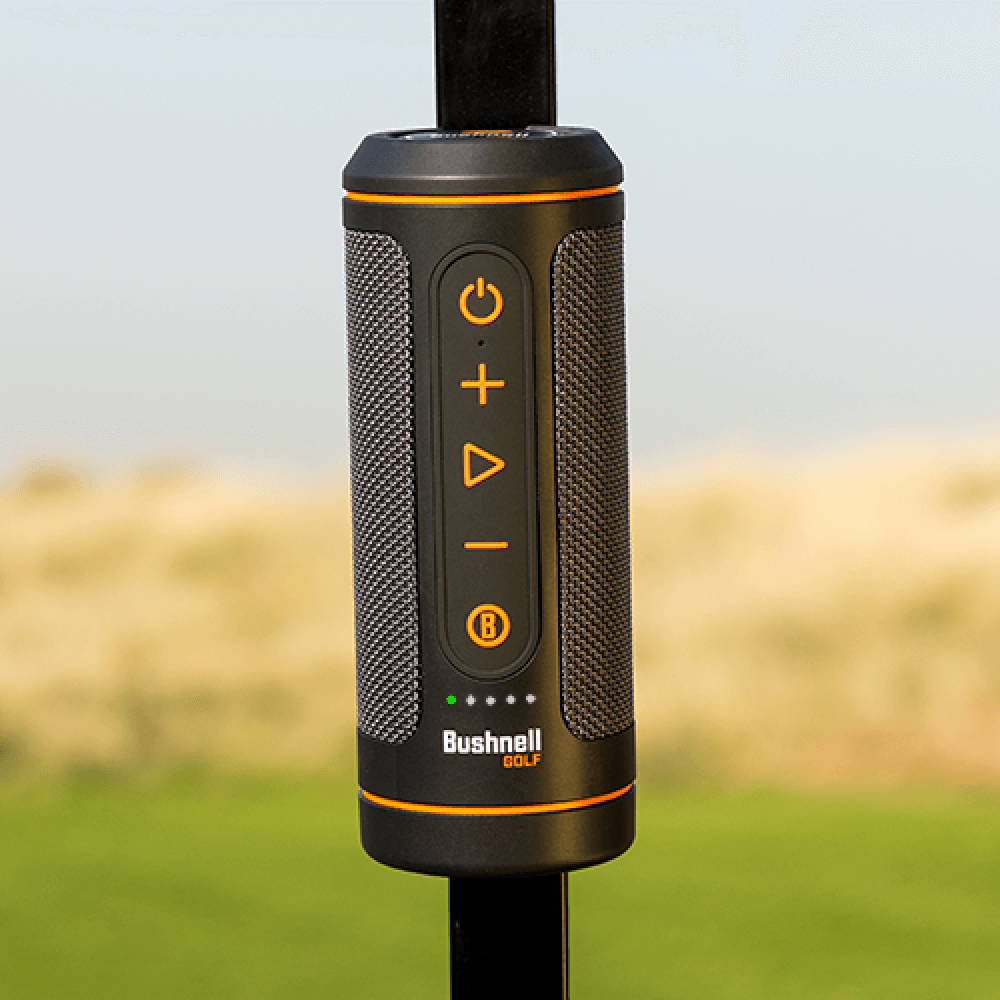
Best for: The social golfer — cart rounds with friends, music on the course, and casual yardages without pulling out a device.
- Bluetooth speaker with audible front/center/back GPS distances (38,000+ courses via Bushnell Golf app)
- BITE magnetic cart mount + magnetic remote; pairs with a second Wingman 2 for stereo
- 14+ hour battery (roughly 3 rounds); IPX6 water-resistant
- USB-C charging + USB-A power-bank port; custom sound bites and 1st-tee introductions
Pros
- Sound quality consistently praised in customer reviews
- The magnet mount is rock-solid on cart bars
- Doubles as a power bank for your phone
Cons
- One reviewer notes the remote's top button can pop out and get lost
- As a GPS it's a convenience, not a precision instrument — serious players still want a laser
Phigolf 2 (PHG-200 Flex) Home Golf Simulator
Typically around $280–$330
The cheapest credible entry into "play golf at home" — no net, no ball, no dedicated room required.
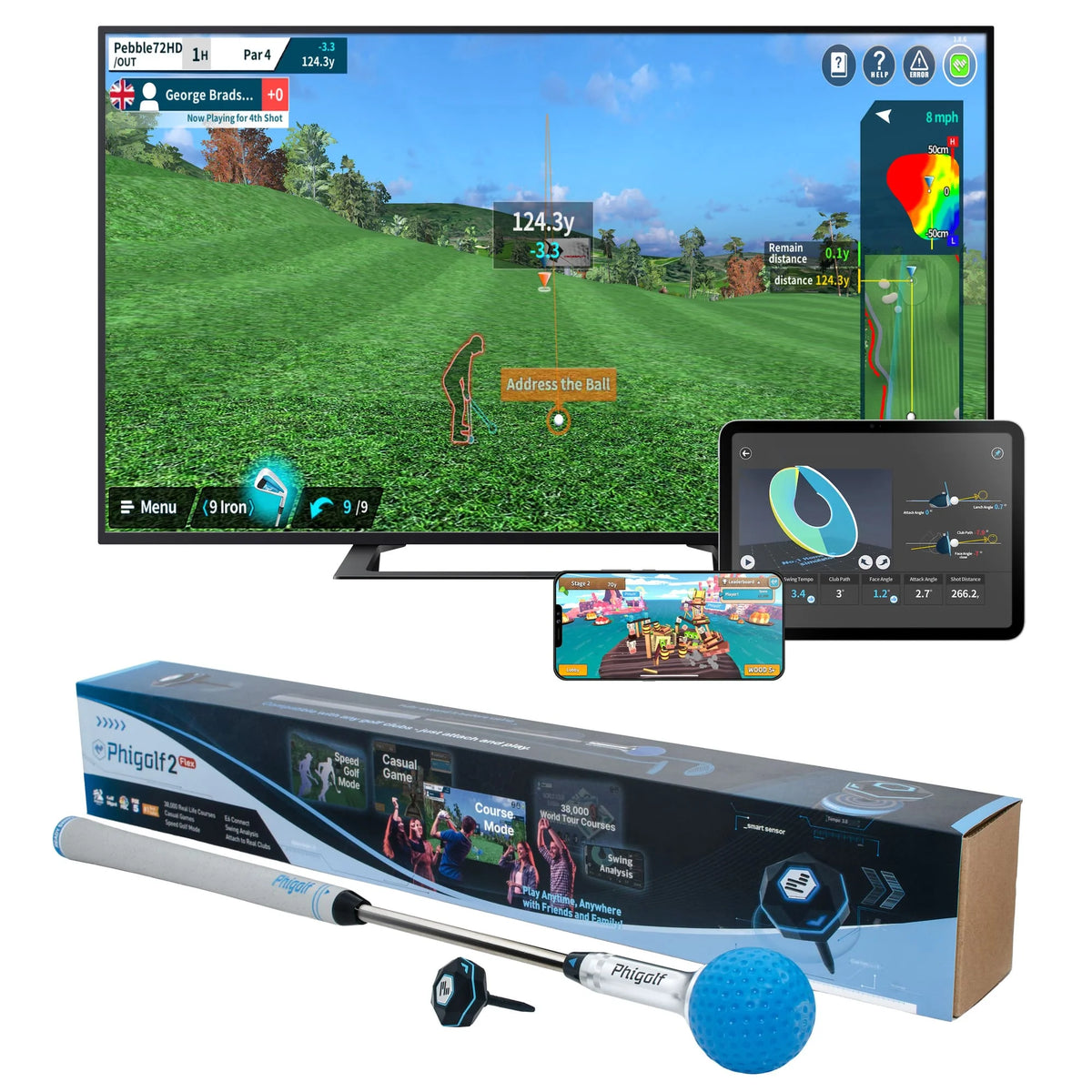
Best for: Beginners, families, and apartment dwellers who want golf entertainment and basic swing practice indoors.
- 9.8g 9-axis motion sensor (Bluetooth, USB-C) attaches to the included swing stick or your own clubs
- 38,000+ courses in the Phigolf app plus E6 Connect compatibility
- 3D swing analysis (speed, tempo, path); multiplayer up to 4 players
- Works on phone, tablet, or smart TV
Pros
- Unbeatable convenience — swing in your living room with zero setup
- Genuinely fun multiplayer party game
- E6 Connect support adds real course play
Cons
- It's a motion-sensor game, not a true launch monitor — ball flight is estimated from your swing, so don't expect Rapsodo-level data
- Amazon ratings are middling (~3.7–3.8/5)
- Note: the WGT app partnership has ended, so WGT courses no longer work with Phigolf sensors
Motocaddy M7 GPS Remote Electric Caddy
Typically around $2,099
The ultimate splurge — a remote-controlled walking caddy with built-in GPS. Legitimately best in class, but a niche purchase at this price.
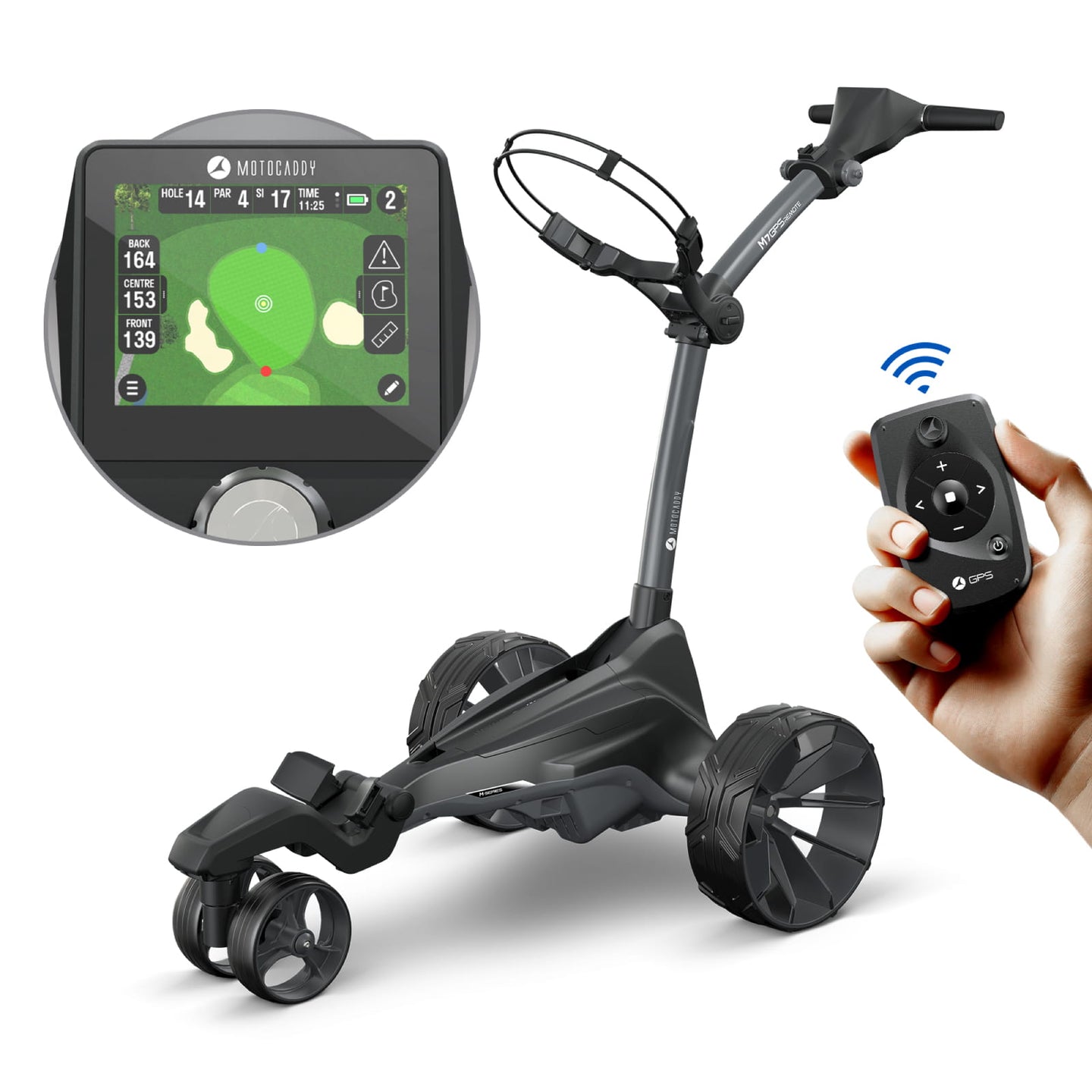
Best for: The dedicated walking golfer who wants to save their back and legs — especially older players or hilly-course regulars.
- Full remote control (forward/reverse/left/right, 100m+ range) + 3.5" GPS touchscreen
- 40,000+ preloaded courses with 2D/3D hole mapping, drag-and-drop pin positioning, Dynamic Green View
- Twin 230W whisper-quiet motors; 28V CLICK 'N' CONNECT cable-free lithium battery
- Automatic Downhill Control; USB charging port; Wi-Fi course updates; Bluetooth phone notifications
Pros
- GolfMagic named the M7 line the best electric trolley of 2026
- Remote control is the feature owners say they never give up
- Class-leading build quality and downhill control
Cons
- $2,099 is a massive outlay — 10x a good push cart
- Heavy to lift in and out of a car trunk despite folding compactly
- GPS screen (3.5") is smaller than PowaKaddy's rival flagship
Golf gadget FAQ
Rangefinder or GPS watch — which should I buy first?
If you mostly want exact distance to the flag, a laser rangefinder (like our #1 pick) is the tool — nothing beats it for pin-seeking. If you'd rather glance at your wrist for front/middle/back green distances and hazard carries, a GPS watch is more convenient and doubles as an everyday smartwatch. Plenty of golfers end up with both; if you're choosing one, pick based on how you actually play.
Are budget golf gadgets worth it, or should I buy the premium pick?
It depends on the category. Budget laser rangefinders at $200–$250 are genuinely good — you give up some optics and features, not accuracy. Training aids like the Orange Whip are worth buying at full price because the cheap knockoffs don't replicate the weighting. For launch monitors, though, the jump from a $300 unit to the MLM2PRO's measured spin data is real and meaningful if you practice seriously. We've added an "On a budget?" box under our priciest picks with a specific cheaper alternative and an honest rundown of what you'd give up.
Do any of these require a subscription?
Yes — and it's the fine print worth reading. Arccos includes the first year, then charges an annual fee (verify the current price at arccos.com — it has changed). Rapsodo's MLM2PRO needs its Premium subscription for spin data, simulation, and third-party software. HackMotion is a one-time purchase with no subscription, which is part of its appeal.
Where's the best place to buy golf tech?
Buying direct from the manufacturer usually gets you the full warranty and the latest model, while big retailers (Dick's, Best Buy, PGA Tour Superstore, Amazon) compete on price and run frequent sales. Prices on this page are typical street prices — always check the current price before buying, since golf gear goes on sale constantly.
Never miss a ranking update
New golf rankings, major price drops, and honest buying guides — straight to your inbox. No spam, unsubscribe anytime.